The ‘Holiday Program’ Spectrum: Rest vs. Active Recovery Over the Christmas Break
When the Christmas and New Year break arrives across Melbourne, corporate professionals and busy parents usually fall into one of two extreme camps.
On one side of the spectrum are the hyper-disciplined "go-getters." These high-performing executives have spent the past eleven months grinding through intense corporate schedules and heavy gym routines without taking a single week off. Even during a coastal holiday or family break, they feel intense anxiety about stepping away from the barbell, forcing themselves to find makeshift holiday gyms or pushing through exhausting routines on vacation.
On the other side are those who stop moving entirely on December 20th. By the time January 2nd rolls around, two weeks of total physical inactivity, sitting in cars, and festive dining leave their joints feeling locked, their lower backs stiff, and their energy completely depleted.
At
Active Heads, our university-qualified coaches view the Christmas break through a balanced, biological lens.
Health management isn't a rigid, binary choice between total physical burnout or total stagnation. True longevity requires understanding where you sit on the 'Holiday Program' Spectrum—and whether your body currently requires complete biological de-loading or low-dose, high-yield active recovery.
The Science: De-loading vs. Movement Habit Preservation
To optimise your physical performance for the year ahead, it is vital to distinguish between two completely different physiological needs during the festive break:
- When Your Body Needs Complete Biological De-Loading: If you have been training heavy year-round while navigating high corporate stress, your central nervous system, joint capsules, and connective tissues accumulate systemic fatigue. Forcefully stepping away from heavy resistance for 5 to 7 days allows micro-tears in collagen tissue to fully repair, reduces chronic systemic inflammation, and resets central nervous system sensitivity.
When Your Body Needs Active Recovery: For professionals who train 2 to 3 times a week or sit for long hours, stopping movement completely causes rapid neuromuscular deconditioning. The brain dulls its neurological connection to stabiliser muscles (like the glutes and core), joint synovial fluid dries up, and returning to training in January becomes painful and prone to injury.
Forcing an over-trained executive to keep lifting over Christmas delays recovery, while letting a desk-bound parent sit completely still for two weeks leads to joint stiffness.
Low-Dose, High-Yield Movement Strategies
If you fall into the category of needing to maintain habit momentum without adding physical stress over the Christmas break, you don't need heavy equipment. You simply need high-yield movement micro-blocks:
- Active Isometric Loading: Holding static, mid-range bodyweight holds (such as split squats or wall sits for 30–45 seconds) acts as a mechanical analgesic. Isometrics pump nutrient-rich blood into cold tendons and lubricate joint capsules without causing muscle damage or delayed onset muscle soreness (DOMS).
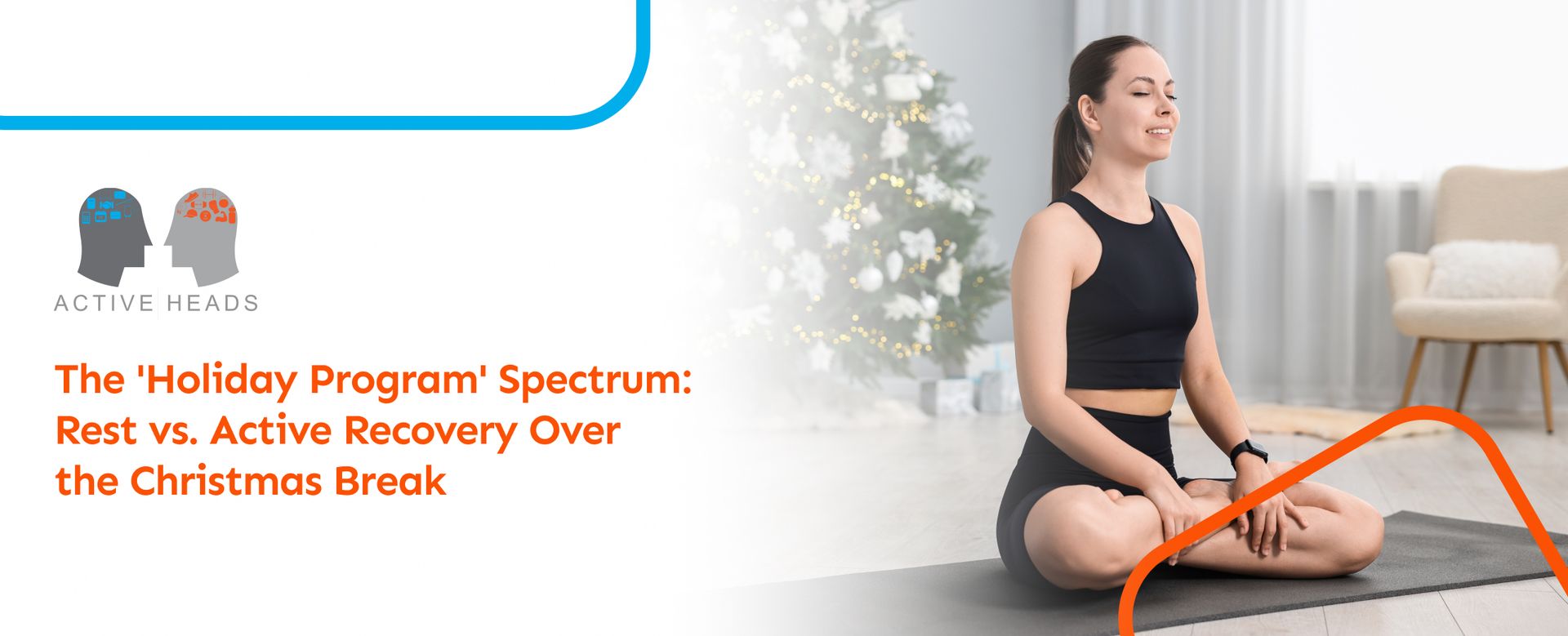
- Parasympathetic Down-Regulation Breathing: Incorporating Wim Hof-style or structured down-regulation breathing (such as box breathing with extended exhalations) regulates the autonomic nervous system. Spending 5 to 10 minutes daily on intentional breathwork lowers morning cortisol, improves digestion, and enhances deep sleep architecture.
- Tri-Planar Joint Mobility: Spend 5 minutes every morning moving your spine and hips through three-dimensional space—incorporating cat-camels, thoracic rotations, and deep hip openers to counteract long holiday drives or flights.
Practical Steps for Your Christmas Break
To ensure you return to Q1 refreshed, mobile, and completely pain-free, implement these simple strategies this holiday season:
- Be Honest About Your Fatigue: If you are feeling physically broken from an intense year, give yourself permission to take a complete 5-day break from intense lifting to let your connective tissue heal.
- Keep the Neuromuscular Habit Alive: If you are prone to joint stiffness, commit to just 10 to 15 minutes of daily mobility work or isometric holds first thing in the morning before family plans begin.
- Eliminate Logistical Friction: Stop worrying about finding local gyms while away. Partner with a service that delivers university-qualified, zero-commute coaching directly to your smartphone so your health strategy runs on autopilot.
Honour Your Biology This Christmas
True strength isn't about forcing yourself through painful workouts when your body is begging for recovery, nor is it about letting your frame deteriorate into joint stiffness over the holidays. By honouring your biology and choosing the right approach during the holidays, you protect your physical equity and enter the new year at peak capacity.
Ready to Autopilot Your Health Over the Holidays?
Our bespoke online personal training service delivers university-qualified, zero-commute coaching engineered around your individual biomechanics, recovery needs, and holiday calendar.
Apply today!