BLOGS

As the October sun warms up Melbourne and daylight savings stretches the evenings out along the foreshore, the fitness industry shifts its marketing into overdrive. Commercial gyms and quick-fix boot camps flood your feed with high-intensity challenges designed purely around burning calories, stripping fat, and hitting short-term weight goals before summer. But at Active Heads , our university-qualified coaches see this hyper-focus on fat loss as a major strategic mistake for the corporate athlete. If you are a professional or a busy parent over the age of 40, your primary health metric shouldn't be what you are losing—it should be what you are keeping. When you manage a business or a portfolio, you understand that long-term security requires building equity—assets that compound over time and shield you from future volatility. Your physical body operates on the exact same economic principle. As you age, high-quality, dense lean muscle tissue is not an aesthetic luxury. It is the ultimate longevity currency, acting as a critical biological buffer that protects your metabolism, preserves your mobility, and ensures your physical independence for the ten-year marathon of life. The Realities of Muscle Depreciation: The Sarcopenia Toll In the financial world, asset depreciation is a line item you actively manage. In biology, muscle depreciation is known as sarcopenia—the involuntary, age-related loss of lean muscle mass and function. Starting around the age of 30, and accelerating rapidly after 40, the human body naturally begins to shed between 3% to 5% of its muscle mass per decade if it is not actively stimulated. For a sedentary executive spending eight to ten hours a day in a boardroom chair, this depreciation rate hits maximum speed: The Metabolic Slump: Muscle tissue is highly metabolically active; it is the primary engine driving your baseline metabolic rate. As you lose lean mass equity, your daily calorie expenditure drops, making middle-age fat gain around the midsection almost inevitable, even if your diet remains unchanged. The Insulin Sink: Your skeletal muscles act as your body’s main clearing house for blood glucose. When muscle mass drops, you lose your primary insulin sink, significantly increasing your risk of developing insulin resistance, type 2 diabetes, and systemic mid-year fatigue. The Structural Instability: Muscles are the dynamic stabilisers of your skeletal system. When you lose muscle quality in your glutes, core, and upper back, your joints are forced to absorb everyday mechanical forces. This is the root cause of the chronic lower back twinges and shoulder pinches that sideline so many local professionals. Treating Strength Training Like a Capital Reinvestment Traditional gym culture tells you to go to a class to get sweaty or burn off steam. At Active Heads, we treat your training as a precise, calculated capital reinvestment into your physical framework. Our ten years of experience has proven that building lean mass equity after 40 requires a university-qualified approach rooted in safety, progression, and data. We build your physical portfolio using specific, high-yield principles: Precision Mechanical Tension: We don't rely on chaotic, high-speed jumping movements that stress your joints. We use controlled, progressive resistance training that places optimal mechanical tension across your muscles, signaling your nervous system to synthesise new protein fibers and build bone density safely. Individual-First Biomechanics: We deep-dive into your unique medical history, joint architecture, and past injuries. Our coaches tailor every movement—adjusting leverage, range of motion, and tempo—to ensure you build lean mass without exposing your spine or knees to unnecessary risk. The Honesty Factor: If a stressful corporate quarter or broken sleep with the kids has left you completely drained, we don't blindly force a grueling session. Our team has the integrity to alter the volume, pivoting toward structural alignment and focused stability work so you build muscle equity without triggering systemic burnout. Frictionless Habits to Protect Your Physical Assets To halt the depreciation of your muscle tissue and optimise your metabolic health outside of your sessions this October, implement these practical habits: Audit Your Protein Intake: To build and maintain lean mass equity, your body requires the correct building blocks. Ensure you are structuring every meal around a high-quality, lean protein source (such as chicken, fish, eggs, or tofu) to stimulate muscle protein synthesis and support muscle recovery. Prioritise Resistance Over Mindless Cardio: While walking is fantastic for mental clarity and cardiovascular health, cardio alone cannot halt sarcopenia. Ensure your weekly routine prioritises structured strength work to signal to your body that your muscle mass is non-negotiable. Eliminate the Logistics Friction: When your Q4 calendar is packed, the chore of driving to a crowded, ego-driven commercial gym is often the breaking point that causes consistency to fail. Whether we pull up to your home for our mobile service or manage your programming via our online platform, we handle the physical strategy so your training fits effortlessly into your life. Ready to Reinvest in Your Physical Longevity This Spring? Your muscle mass is the primary financial reserve of your physical longevity. By shifting your mindset away from short-term fat-loss challenges and focusing instead on building long-term lean mass equity, you secure a highly resilient metabolism, protect your body from structural injury, and guarantee your physical freedom for decades to come. Our Online Personal Training service is the ultimate, zero-commute choice for high-performing professionals and parents who want university-qualified, bespoke coaching engineered specifically to build lean mass, protect joint health, and fit your busy schedule seamlessly. Reach out today !
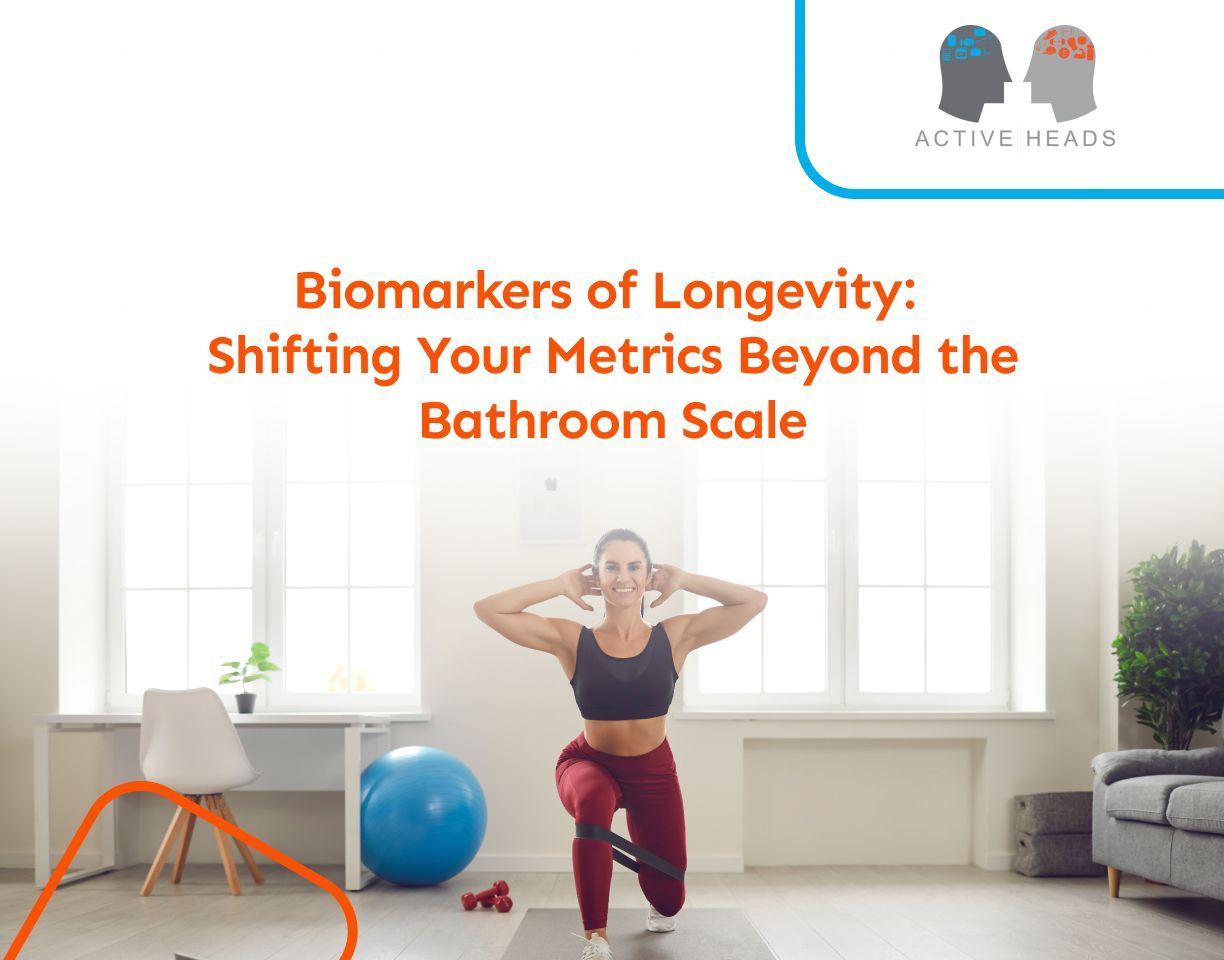
As the warmer October weather settles across Melbourne, standard fitness marketing hits a predictable fever pitch. Commercial gyms and quick-fix boot camps saturate your feed with messages centered almost exclusively on aesthetic transformation. They push generic weight-loss challenges, calorie-restriction models, and numbers on a bathroom scale as the ultimate measures of health success. But at Active Heads , our university-qualified coaches view this narrow focus as a massive disservice to the high-performing professional. For an executive or a busy parent, treating a single, volatile metric like body weight as your primary health indicator is an outdated strategy. Your scale cannot differentiate between muscle mass, water retention, visceral fat, or stress-induced inflammation. More importantly, it tells you absolutely nothing about how your body is aging inside or how well your internal systems are running. If you want to manage your health with the same analytical precision you apply to your business portfolio, you need to shift your focus to biomarkers of longevity. By tracking data-driven physiological metrics, you protect your body from systemic burnout, optimise your daily cognitive processing, and ensure you are built for the ten-year marathon of life. The Longevity Portfolio: High-Yield Health Metrics To truly understand your physical equity, you must look at the specific, measurable biological indicators that science links directly to a long, disease-free healthspan. Four key biomarkers provide a comprehensive view of your internal health architecture: Heart Rate Variability (HRV): HRV measures the specific variation in time between consecutive heartbeats, regulated entirely by your autonomic nervous system. A high HRV indicates a resilient, highly adaptable nervous system that can handle intense corporate stress and recover rapidly from physical training. A chronically low HRV is an early warning system indicating that your body is locked in a sympathetic (fight-or-flight) state, placing you at a high risk for systemic burnout and injury. Resting Heart Rate (RHR): Your RHR is a direct indicator of your cardiovascular efficiency and stroke volume (how much blood your heart can pump per contraction). As your physical conditioning and cardiovascular health improve, your heart requires fewer beats to deliver oxygen to your tissues, significantly reducing long-term stress on your cardiovascular system. Grip Strength & Muscle Quality: In epidemiological longevity research, grip strength is widely recognised as a powerful proxy for total body muscle mass and systemic biological age. A decline in grip strength correlates strongly with accelerated aging, cognitive decline, and metabolic dysfunction. Building and preserving high-quality, dense lean muscle tissue is a non-negotiable insurance policy for your mobility after 40. VO2 Max (Cardiorespiratory Fitness): VO2 max measures the maximum volume of oxygen your body can utilise during intense exercise. It is one of the strongest independent predictors of all-cause mortality. Elevating your VO2 max doesn't just protect your longevity; it actively improves mitochondrial density, giving you more daily physical energy and sharper mental clarity in the boardroom. Moving from Arbitrary Rules to Autoregulated Precision Traditional fitness culture encourages you to blindly push through exhaustion to chase a smaller number on the scale. At Active Heads, we reject this ego-driven approach. Our ten years of experience has proven that true high performance requires a data-driven, individual-first framework rooted in absolute honesty. We use these advanced biomarkers to guide, rather than dictate, your training: Real-Time Stress Adjustments: If your wearable data or our initial physical assessment reveals a major drop in your HRV or a spike in your RHR due to a brutal corporate week or broken sleep with the kids, we don't force a heavy, stressful lift. Our team has the integrity to pivot the session immediately toward dynamic mobility, structural conditioning, and breath architecture to restore your system safely without causing an injury. Building Functional Asset Equity: We design our strength programs to systematically improve your lean mass quality and grip strength, using precision biomechanics that respect your unique medical history. Practical Habits to Optimise Your Longevity Metrics To start shifting your focus away from the bathroom scale and actively upgrade your internal biomarkers this October, implement these frictionless adjustments: Track Trends, Not Daily Fluctuation: If you use a wearable device (like a WHOOP, Oura ring, or Apple Watch), stop stressing over a single bad daily score. Look at your rolling 7-day and 30-day trends for HRV and resting heart rate to get an accurate picture of how your body is adapting to your lifestyle load. Incorporate Zone 2 Cardio: Dedicate 30 to 45 minutes a week to low-intensity, conversational movement—like a steady walk, cycle, or row where you can maintain a conversation without gasping for air. This is the ultimate, low-stress tool to improve your RHR, mitochondrial health, and baseline recovery capacity. Remove the Training Commute Friction: Tracking your metrics shouldn't require rearranging your frantic Q4 calendar. Whether we bring our mobile coaching directly to your home or manage your data-driven programming via our online platform, we make elite health management entirely effortless. Invest in True Health Assets Your health is too complex to be measured by a single number on a scale. By shifting your focus to the biomarkers of longevity and working with your internal biology, you protect your body from structural breakdown, banish corporate fatigue, and secure a resilient physical foundation for decades to come. Our Online Personal Training service is the ultimate, zero-commute choice for high-performing professionals and parents who want university-qualified, bespoke coaching engineered specifically to analyse biomarkers, protect joint health, and build lasting longevity. Apply for personal training to master your health logevity today !
As the warmer October weather settles across Melbourne, standard fitness marketing hits a predictable fever pitch. Commercial gyms and quick-fix boot camps saturate your feed with messages centered almost exclusively on aesthetic transformation. They push generic weight-loss challenges, calorie-restriction models, and numbers on a bathroom scale as the ultimate measures of health success. But at Active Heads , our university-qualified coaches view this narrow focus as a massive disservice to the high-performing professional. For an executive or a busy parent, treating a single, volatile metric like body weight as your primary health indicator is an outdated strategy. Your scale cannot differentiate between muscle mass, water retention, visceral fat, or stress-induced inflammation. More importantly, it tells you absolutely nothing about how your body is aging inside or how well your internal systems are running. If you want to manage your health with the same analytical precision you apply to your business portfolio, you need to shift your focus to biomarkers of longevity. By tracking data-driven physiological metrics, you protect your body from systemic burnout, optimise your daily cognitive processing, and ensure you are built for the ten-year marathon of life. The Longevity Portfolio: High-Yield Health Metrics To truly understand your physical equity, you must look at the specific, measurable biological indicators that science links directly to a long, disease-free healthspan. Four key biomarkers provide a comprehensive view of your internal health architecture: Heart Rate Variability (HRV): HRV measures the specific variation in time between consecutive heartbeats, regulated entirely by your autonomic nervous system. A high HRV indicates a resilient, highly adaptable nervous system that can handle intense corporate stress and recover rapidly from physical training. A chronically low HRV is an early warning system indicating that your body is locked in a sympathetic (fight-or-flight) state, placing you at a high risk for systemic burnout and injury. Resting Heart Rate (RHR): Your RHR is a direct indicator of your cardiovascular efficiency and stroke volume (how much blood your heart can pump per contraction). As your physical conditioning and cardiovascular health improve, your heart requires fewer beats to deliver oxygen to your tissues, significantly reducing long-term stress on your cardiovascular system. Grip Strength & Muscle Quality: In epidemiological longevity research, grip strength is widely recognised as a powerful proxy for total body muscle mass and systemic biological age. A decline in grip strength correlates strongly with accelerated aging, cognitive decline, and metabolic dysfunction. Building and preserving high-quality, dense lean muscle tissue is a non-negotiable insurance policy for your mobility after 40. VO2 Max (Cardiorespiratory Fitness): VO2 max measures the maximum volume of oxygen your body can utilise during intense exercise. It is one of the strongest independent predictors of all-cause mortality. Elevating your VO2 max doesn't just protect your longevity; it actively improves mitochondrial density, giving you more daily physical energy and sharper mental clarity in the boardroom. Moving from Arbitrary Rules to Autoregulated Precision Traditional fitness culture encourages you to blindly push through exhaustion to chase a smaller number on the scale. At Active Heads, we reject this ego-driven approach. Our ten years of experience has proven that true high performance requires a data-driven, individual-first framework rooted in absolute honesty. We use these advanced biomarkers to guide, rather than dictate, your training: Real-Time Stress Adjustments: If your wearable data or our initial physical assessment reveals a major drop in your HRV or a spike in your RHR due to a brutal corporate week or broken sleep with the kids, we don't force a heavy, stressful lift. Our team has the integrity to pivot the session immediately toward dynamic mobility, structural conditioning, and breath architecture to restore your system safely without causing an injury. Building Functional Asset Equity: We design our strength programs to systematically improve your lean mass quality and grip strength, using precision biomechanics that respect your unique medical history. Practical Habits to Optimise Your Longevity Metrics To start shifting your focus away from the bathroom scale and actively upgrade your internal biomarkers this October, implement these frictionless adjustments: Track Trends, Not Daily Fluctuation: If you use a wearable device (like a WHOOP, Oura ring, or Apple Watch), stop stressing over a single bad daily score. Look at your rolling 7-day and 30-day trends for HRV and resting heart rate to get an accurate picture of how your body is adapting to your lifestyle load. Incorporate Zone 2 Cardio: Dedicate 30 to 45 minutes a week to low-intensity, conversational movement—like a steady walk, cycle, or row where you can maintain a conversation without gasping for air. This is the ultimate, low-stress tool to improve your RHR, mitochondrial health, and baseline recovery capacity. Remove the Training Commute Friction: Tracking your metrics shouldn't require rearranging your frantic Q4 calendar. Whether we bring our mobile coaching directly to your home or manage your data-driven programming via our online platform, we make elite health management entirely effortless. Invest in True Health Assets Your health is too complex to be measured by a single number on a scale. By shifting your focus to the biomarkers of longevity and working with your internal biology, you protect your body from structural breakdown, banish corporate fatigue, and secure a resilient physical foundation for decades to come. Our Online Personal Training service is the ultimate, zero-commute choice for high-performing professionals and parents who want university-qualified, bespoke coaching engineered specifically to analyse biomarkers, protect joint health, and build lasting longevity. Apply for personal training to master your health logevity today !

October in Melbourne brings a welcome shift. Daylight savings kicks in, the evenings stretch out beautifully across Melbourne, and the countdown to the end of the year officially begins. But for busy parents and high-performing executives October also introduces a chaotic logistical storm. School term schedules shift, summer sport registrations peak, corporate Q4 demands intensify, and family calendars rapidly fill up. During this frantic period, even the most dedicated individuals find their health routines starting to fracture. You miss a session because a meeting ran late, or you skip a morning workout because a restless child disrupted your sleep architecture. When your routine falls apart, standard fitness culture tells you that you simply lack motivation or discipline. At Active Heads , our university-qualified coaches reject that lazy, guilt-driven narrative. Motivation is a volatile emotion that deserts you when life gets busy. High performance through the chaotic spring months isn't built on willpower—it is built on environmental design. To protect your health assets when your calendar redlines, you must transition from relying on motivation to building a frictionless routine. The Psychology of Friction: Why Routines Fail in Q4 In behavioral psychology, friction is defined as any variable that makes a behavior harder to execute. Human brains are biologically wired to take the path of least resistance. When your mental load is low, you can easily overcome high friction. But when you are exhausted from corporate decision-making and family logistics, any small barrier will cause you to abandon your workout. Consider the hidden friction points in a standard commercial gym routine: The Cognitive Friction: Arriving at a gym and having to decide what exercises to do, what weights to lift, and how to structure the session. The Logistical Friction: Packing a gym bag, fighting peak-hour Melbourne traffic, searching for a car park, and navigating a crowded training floor. The Social Friction: Walking into an intimidating, ego-driven fitness environment where you feel like a face in a crowd rather than a valued individual. When the October calendar hits maximum volatility, these friction points stack up until the path of least resistance is simply staying on the couch. Consistency Architecture: Engineering a Zero-Friction Routine True consistency doesn't require you to wake up at 4:30 AM and force yourself to grind. It requires you to audit your environment and engineer the friction out of your schedule. At Active Heads, we act as the consistency architects for your exercise routine: The Zero-Decision Mental Offload: We take away 100% of the cognitive friction. Your program is fully prepared based on your unique medical history, goals, and real-time energy levels. You simply show up, let your mind go blank, and let us manage the strategy. Autoregulated Adaptability: If family life or corporate pressure disrupts your day, an honest coach doesn't penalise you. We adapt seamlessly. If you arrive at a session running on four hours of sleep, our team has the integrity to pivot—swapping high-stress lifting for dynamic mobility and nervous-system-restoring breathing methods. Practical Steps to Put Your Health on Autopilot To bulletproof your consistency throughout October, implement these frictionless lifestyle design strategies: Automate Your Schedule: Treat your movement sessions like high-stakes board meetings. Lock them into your calendar at the start of the month and build your family logistics around them, rather than trying to fit training into the leftover gaps of your day. Reduce the Commute Barrier: The physical transition from home or office to the gym is where most routines break down. Look for options that bring the training directly to you to eliminate the transit barrier entirely. The 15-Minute Rule: If your day is completely descending into chaos, don't write off your health entirely. Shift to a maintenance mindset. A focused 15-minute mobility flow or rapid bodyweight circuit keeps the neurological habit alive, protecting your physical equity until your schedule settles. Ready to Build a Frictionless Strategy That Fits Your Life? Don't let a packed October calendar steal your physical momentum. By stoping the reliance on fleeting motivation and focusing instead on building a frictionless environment, you protect your body from injury and ensure you enter the festive season strong, energised, and ahead of the game. Our Online Personal Training service is the ultimate, zero-commute choice for high-performing professionals and parents who want university-qualified, bespoke coaching engineered to remove all training friction, adapt to your schedule, and deliver elite results from anywhere. Reach out to us today to apply for personal training!
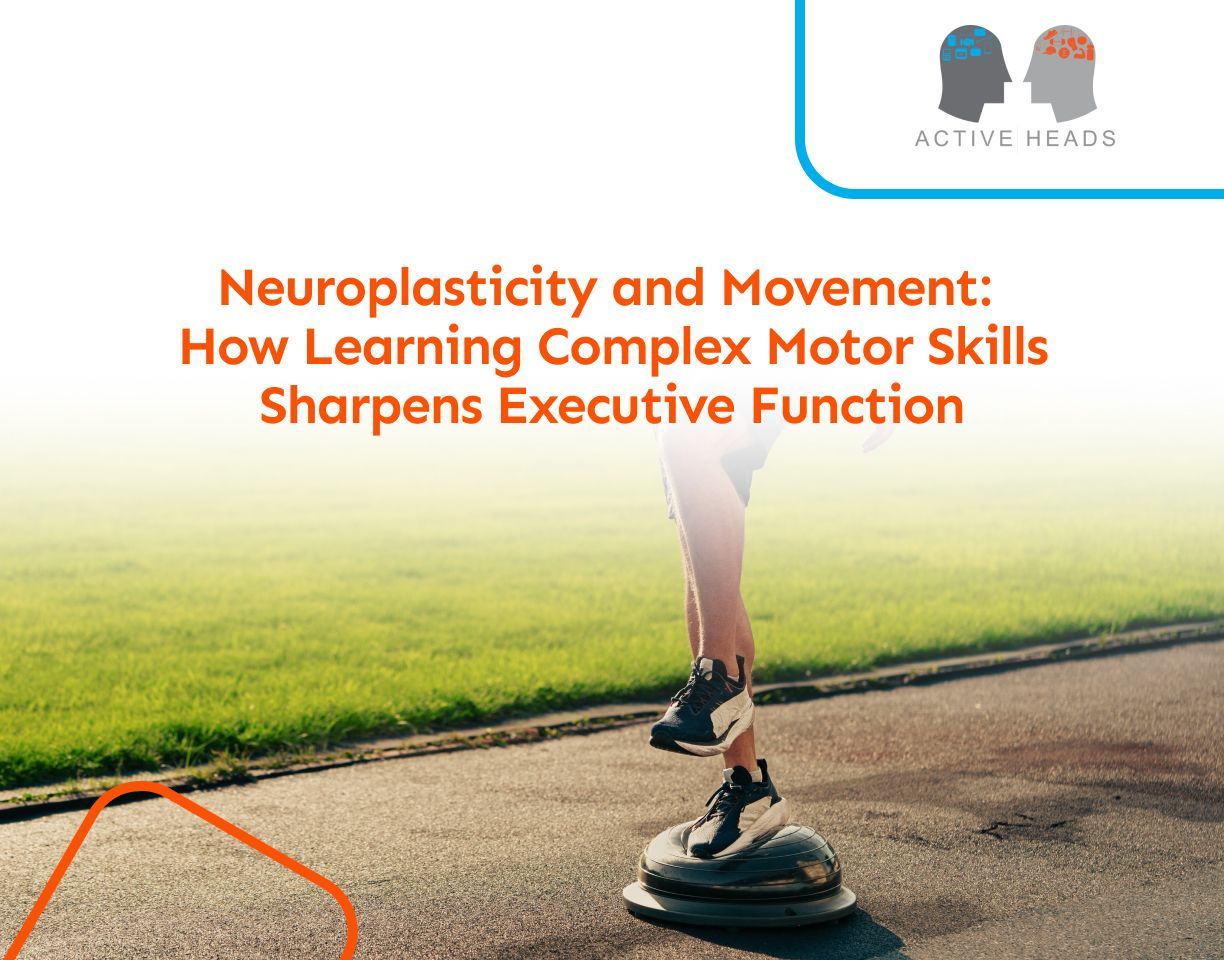
As spring gains momentum in September, high-performing professionals and parents across Melbourne are looking for ways to sharpen their edge. In the corporate arena, you are constantly required to innovate, adapt to shifting markets, and process complex information under pressure. To keep your cognitive processing sharp, you might rely on brain-training apps, executive coaching, or cognitive puzzles. But at Active Heads , our university-qualified background allows us to look at cognitive enhancement through a much more powerful biological lens: physical movement. Most traditional fitness routines treat the gym as a place to mindlessly burn calories—walking on a treadmill, sitting on a chest press machine, or following a repetitive circuit while zoning out. If you want to maximise both your physical fitness and your brainpower this month, you need to understand neuroplasticity—and how learning complex motor skills acts as a powerful cognitive enhancer. The Science: Building New Neural Pathways Through Movement Neuroplasticity is the brain’s ability to reorganise itself by forming new neural connections throughout life. For decades, scientists believed the adult brain was fixed. We now know that the brain can actively grow, adapt, and sharpen its processing speed based on the stimuli it receives. While any exercise increases blood flow to the brain, mindless cardio only stimulates a temporary chemical lift. To trigger true structural neuroplasticity, you must challenge your brain with complex motor skill learning: The Prefrontal Cortex Connection: When you perform a complex, unfamiliar movement—such as a multi-planar mobility drill, a coordinated kettlebell flow, or an asymmetric balance exercise—your prefrontal cortex has to work in overdrive to plan, execute, and refine the action. Brain-Derived Neurotrophic Factor (BDNF): Complex movement demands intense focus, which triggers a massive release of BDNF. Often described as "Miracle-Gro for the brain," BDNF stimulates the growth of new neurons and strengthens the synapses responsible for memory, spatial awareness, and cognitive flexibility. Cerebellar Activation: The cerebellum manages physical coordination and balance. However, advanced neurobiology shows the cerebellum is also deeply linked to the prefrontal cortex. By challenging your physical coordination, you directly stimulate the brain areas responsible for switching between complex corporate tasks and solving abstract problems. Moving Beyond the Treadmill Zombie State Traditional commercial gyms are designed for mindless movement. They isolate muscles on machines, allowing your brain to completely switch off. At Active Heads, we treat your training as an intellectual stimulus. We design our programs to challenge both your nervous system and your musculoskeletal system: Cognitive Micro-Challenges: We deliberately build novelty into your sessions. This might look like changing the tempo of a lift, introducing complex rotational stability work, or teaching you advanced bodyweight movement patterns that require complete mental presence. Individual-First Progression: We don't throw complex movements at you to cause frustration. Our university-qualified coaches break down advanced motor skills into safe, progressive steps tailored entirely to your current capacity and medical history. Practical Habits to Boost Your Neuroplasticity To sharpen your cognitive clarity and physical coordination outside of your sessions this September, implement these seamless habits: Break the Monotony: If your daily walk is always the exact same route at the exact same pace, change it up. Walk on different terrain, change your stride frequency, or incorporate brief mobility intervals. Embrace the Discomfort of Learning: When a new physical movement feels awkward at first, don't revert to what is easy. That awkwardness is the exact moment your brain is firing BDNF and building a new neural pathway. Frictionless Support: You shouldn't have to spend your limited free time researching advanced movement protocols. Whether we park in your driveway for an in-home mobile session or guide you via our online platform, we handle the complex strategy so you can reap the cognitive rewards. Ready to Boost Your Physical and Cognitive Edge? Your physical training should do more than just make you sweat—it should upgrade your cognitive machinery. By trading mindless gym repetitions for complex, purposeful motor skills, you protect your body from injury while building a sharper, more adaptable mind. Our Online Personal Training service is the ultimate, zero-commute choice for high-performing professionals and parents who want university-qualified, bespoke coaching engineered to stimulate neuroplasticity, optimise performance, and fit your life. Get in contact with us to apply for personal training and sharpen your edge today!
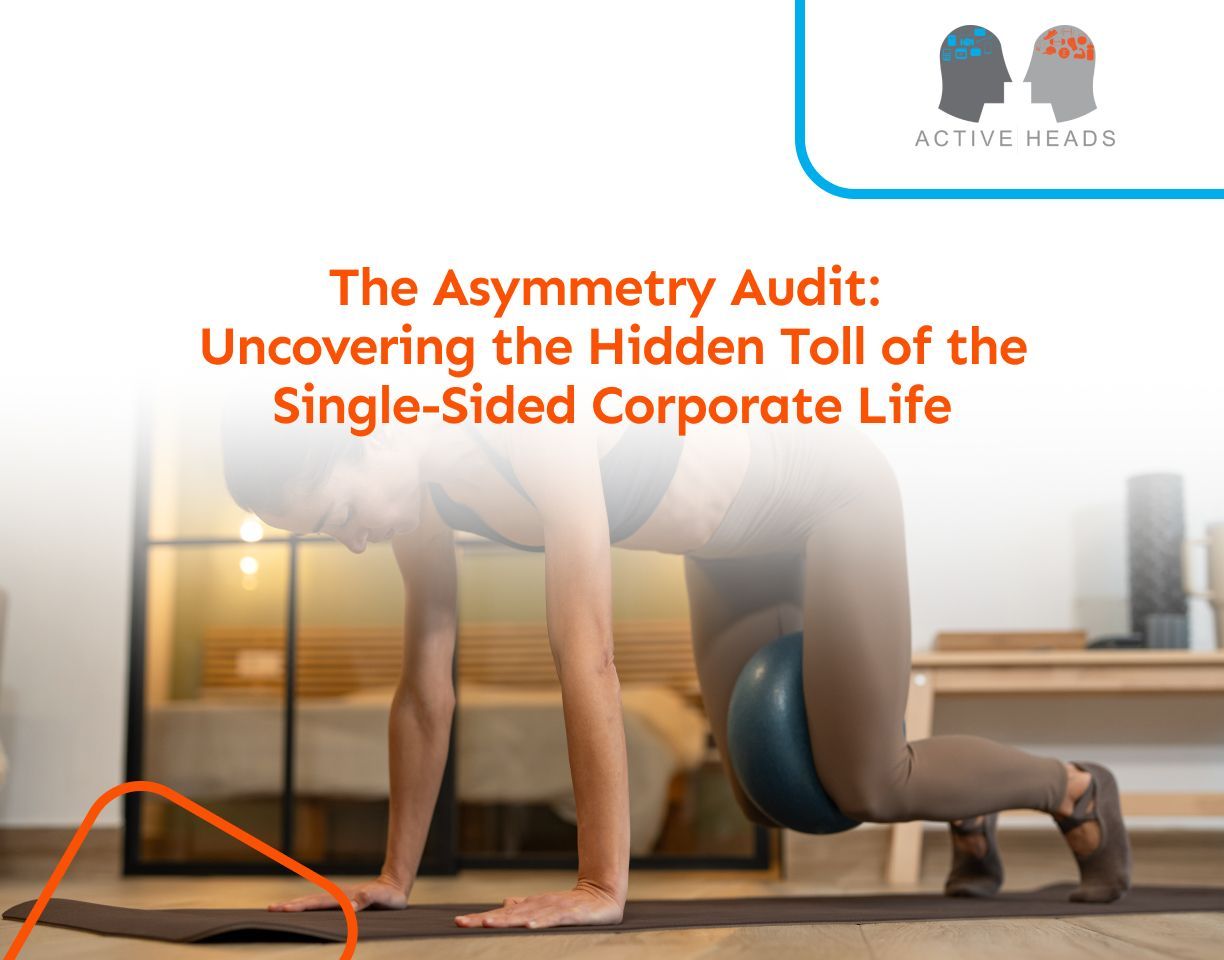
Walk into any corporate office or boardroom across Melbourne, and you will notice a common pattern. It isn't in the spreadsheets or the strategic blueprints—it is in the physical posture of the people running them. Look closely, and you will see executives unknowingly spending hours leaning heavily onto their right hip at a standing desk, slouched slightly to one side in an ergonomic chair, or cradling a phone between their ear and shoulder. On the commute, they consistently carry a heavy laptop bag over the exact same shoulder. To the untrained eye, these are just harmless daily habits. But at Active Heads , our university-qualified coaches view them as a form of structural debt. Over months and years, your nervous system treats these repetitive, single-sided positions as the new normal. It rewires your muscle architecture to adapt, creating deep, hidden physical asymmetries. When you take a misaligned, asymmetric body and subject it to a standard gym routine, your body compensates. This is the hidden culprit behind the sudden lower back twinges, chronic neck stiffness, and stubborn shoulder pinches that sideline so many high-performers. To protect your body from long-term injury, you need an asymmetry audit. The Anatomy of the Single-Sided Executive Your musculoskeletal system functions as a highly connected kinetic chain. When one link is consistently pulled out of alignment by daily habits, the entire structure has to shift to compensate: The Pelvic Hike (The Standing Desk Slouch): Shifting your weight onto one leg for hours causes the muscles on that side of your hip (specifically the gluteus medius and tensor fasciae latae) to become chronically tight and overworked. This physically hikes one side of your pelvis upward, creating a functional leg-length discrepancy that places immense rotational stress on your lower lumbar spine. Scapular Depressor Amnesia (The Laptop Bag Shoulder): Always carrying weight on the same side forces the upper trapezius and levator scapulae muscles to contract continuously to keep the bag from slipping. This glues your shoulder blade into an elevated, rotated position, restricting your thoracic mobility and pinching your rotator cuff when you try to lift weights overhead. The Rotational Adaption: Sitting with one wallet in your back pocket or twisted toward a secondary computer screen forces your pelvis into a permanent rotation. When you perform a symmetrical movement like a barbell squat or a deadlift with a rotated pelvis, one side of your body absorbs up to 30% more mechanical load than the other, making an injury almost inevitable. Why Symmetrical Workouts Can Accelerate Injury Traditional fitness programs rely heavily on bilateral movements—exercises where both limbs work simultaneously, such as standard squats, leg presses, or chest presses. While these movements are excellent for building general strength, they are highly flawed for an asymmetric corporate athlete. Your brain is a master cheat; if your left glute is weak or your right hip is locked up, your body will seamlessly shift the weight to your stronger side during a heavy bilateral lift. You end up making your strong side stronger and your weak side more vulnerable, accelerating joint wear and tear. The Active Heads Asymmetry Blueprint: We reject cookie-cutter routines. Before we load your structure, our university-qualified coaches run a comprehensive movement audit: Unilateral Isolation: We break your movement down into single-leg and single-arm variations (such as rear-foot elevated split squats and single-arm dumbbell rows). This completely eliminates the ability for your dominant side to compensate, exposing and correcting left-to-right strength and mobility gaps. Tri-Planar Realignment: We don't just train you to move forward and backward. We introduce rotational and lateral stability work to un-glue the stiffness caused by hours of sitting in one position. Autoregulated Adjustments: If our real-time audit shows that a high-stress work week has caused your dominant side to lock up tightly, we have the integrity to shift the session. We will dial back the load and focus on neural reactivation and targeted mobility to level the playing field before you lift. Frictionless Habits to Balance Your Structure To counteract the single-sided toll of office life outside your training sessions this September, implement these practical, common-sense tweaks: The Laptop Bag Switch: If you commute with a single-strap bag, consciously swap shoulders every time you change environments (e.g., left shoulder on the way to the car, right shoulder on the way into the office). Better yet, transition to an ergonomic backpack. The Dual-Foot Standing Reset: When using a standing desk, place a small tennis ball or yoga block between your feet. This visual and physical cue reminds your nervous system to distribute your weight evenly across both hips, preventing the pelvic slouch. Let Us Remove the Friction: Realigning your body shouldn't add another task to your calendar. Whether we drive our mobile service to your doorstep or manage your alignment strategy via our online platform, we make elite, university-qualified coaching fit effortlessly into your schedule. Ready to Audit Your Alignment for Spring? You wouldn’t drive a luxury vehicle with the wheel alignment severely out of balance, so don't treat your body any differently. By identifying your hidden asymmetries and transitioning to a smart, unilateral framework, you protect your joints from injury and secure a resilient physical foundation for life. Our Online Personal Training service is the ultimate, zero-commute choice for high-performing professionals and parents who want university-qualified, bespoke coaching engineered specifically to uncover imbalances, optimise biomechanics, and fit your life. Get in touch with us to apply for personal training and balance your body today!
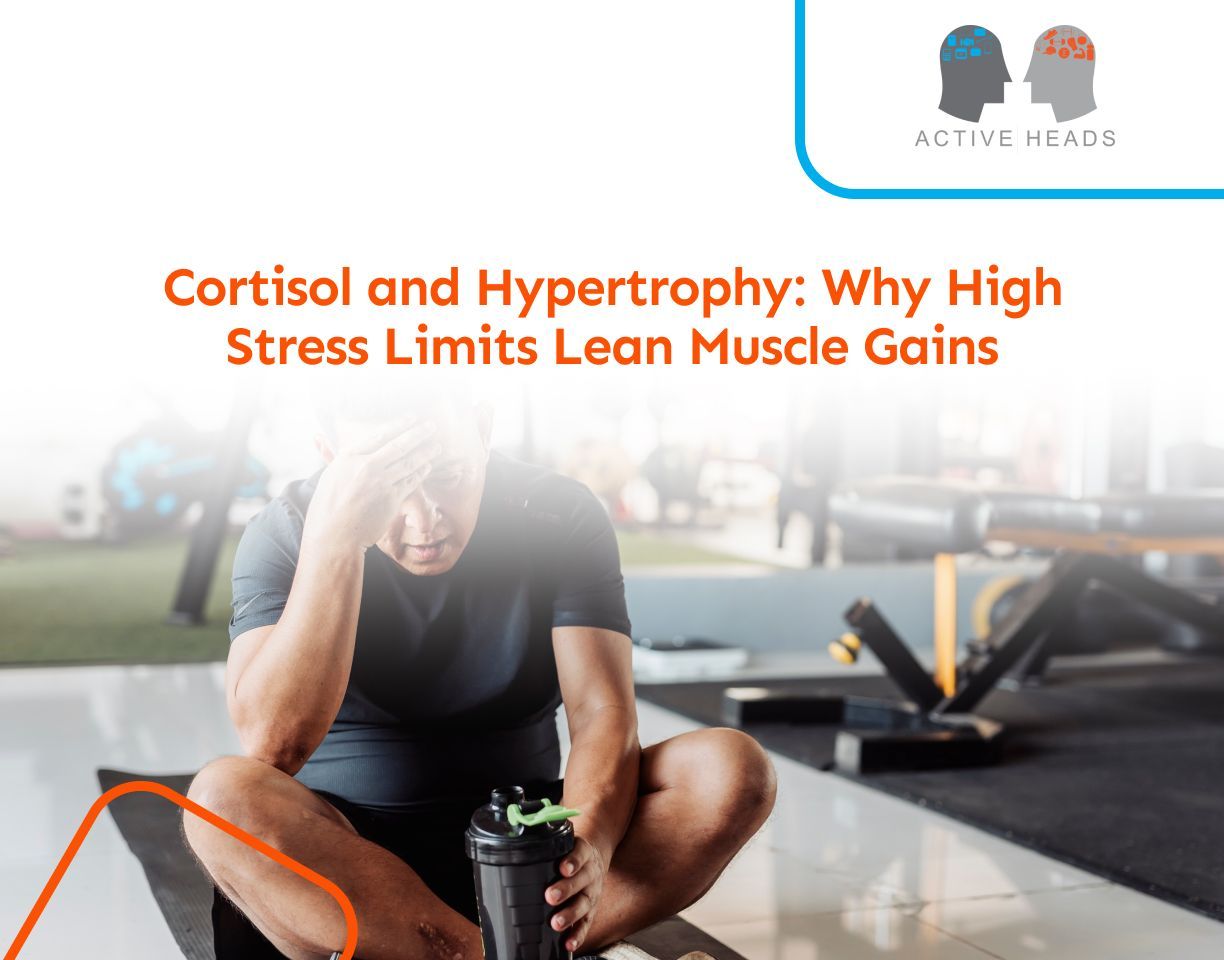
As the third quarter of the year reaches its peak in September, corporate life in Melbourne hits a frantic pace. Between meeting Q3 targets, locking in strategic blueprints for the final months of the year, and navigating changing school term schedules, the mental load on executives and busy parents is exceptionally high. When professional pressure mounts, many people treat the gym as a battleground. They double down on their workouts, pushing through brutal, exhausting training sessions to burn off the mental stress. But at Active Heads , our university-qualified coaches view this approach with deep concern. From a physiological standpoint, forcing a heavily stressed body through a punishing workout doesn't build lean muscle or improve health—it actively destroys it. If you want to maintain your physical edge, protect your hard-earned muscle mass, and prevent abdominal fat storage this month, you need to understand the powerful biological relationship between cortisol and hypertrophy. The Science: How Cortisol Sabotages Your Muscles Cortisol is the body's primary stress hormone, released by the adrenal glands whenever you experience a perceived threat. In short bursts, cortisol is highly beneficial—it sharpens your focus and mobilises energy. However, your body cannot distinguish between a physical threat and a high-stakes corporate deadline. When you experience chronic, unremitting professional stress, your cortisol levels remain elevated. This creates a highly destructive biochemical environment: The Catabolic State: Cortisol is inherently catabolic, meaning it breaks down complex molecules into simpler ones. When cortisol is chronically high, it actively breaks down lean muscle tissue to use for emergency energy, completely sabotaging your hypertrophy (muscle growth) goals. Myostatin Activation: High cortisol levels increase the expression of myostatin—a protein that acts as a biological ceiling, actively preventing your body from building new muscle mass. The Testosterone Block: Cortisol operates on a see-saw with your anabolic hormones, particularly testosterone and growth hormone. When cortisol is high, your body suppresses these recovery hormones, stalling your fat loss and leaving your metabolism sluggish. When you take a body that is already swimming in stress hormones and force it to endure a high-intensity, exhausting workout, you aren't stimulating growth. You are simply adding more stress to an already collapsing system, leading directly to chronic fatigue and a high risk of injury. Pacing Over Punishing: The Autoregulatory Shift Traditional gym culture tells you that results require 100% effort, 100% of the time. At Active Heads, we reject this outdated mindset. Our ten years of experience has proven that true high performance requires an individual-first approach rooted in honesty and data. When you are navigating a high-stress month, your training must shift from a depleting stimulus to a restorative one: Nervous System Auditing: We assess your mental and physical load at the start of every session. If your stress levels are redlining, we have the integrity to pivot your program away from exhausting metabolic circuits or heavy, spine-compressing loads. Soft Periodisation: We substitute high-stress exercises with focused, structural strength work, extended dynamic mobility, and targeted eccentric variations. This allows you to stimulate and preserve lean muscle mass without triggering a massive, system-crushing cortisol spike. Practical Habits to Protect Your Physical Assets To manage your stress and protect your lean muscle equity outside of your sessions this September, implement these frictionless habits: Ditch the No Pain, No Gain Mentality: If you are running on empty, a brisk walk or a dedicated 20-minute mobility routine is vastly more productive for your health than a grueling workout that leaves you spent. Prioritise Post-Workout Decompression: Spend five minutes at the end of your movement practicing down-regulated box breathing. This intentional breathing method signals to your brain that the threat is over, allowing your body to transition smoothly from a stressed state into a recovery state. Remove the Training Friction: When corporate stress is high, you don't need the added chore of a cold, crowded gym commute. Whether we bring our mobile service to your living room or manage your programming via our online platform, we make consistency entirely effortless. Ready for a Training Strategy Built for Your Reality? True strength isn't about how hard you can push when you are already exhausted; it’s about having the intelligence to pace your body when your schedule demands it. By managing your cortisol and training smartly, you protect your body from injury and secure a distinct competitive advantage for the long haul. Our Online Personal Training service is the ultimate choice for high-performing professionals and parents who need university-qualified, bespoke coaching engineered to manage stress, protect muscle mass, and fit seamlessly into a busy lifestyle. Reach out to us to optimise your recovery today !
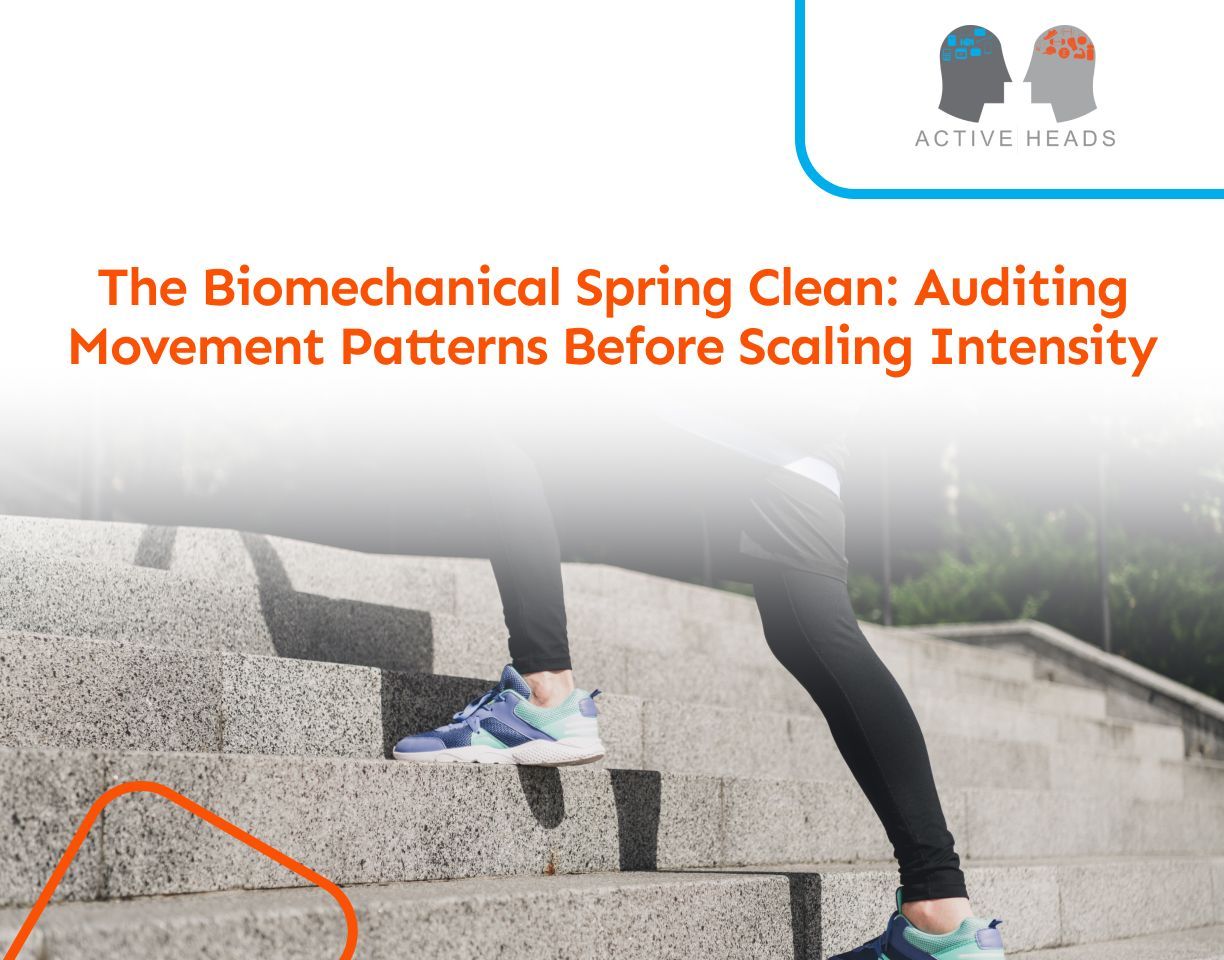
With the arrival of September, a palpable shift takes place. The brutal Melbourne winter frost begins to lift, the days grow longer, and the first glimpses of spring sunshine return. For high-performing professionals and busy parents, this seasonal transition triggers an instinctive urge to ramp things up. You want to shake off the winter stagnation, increase your training intensity, head outdoors for jogs, and fast-track your fitness ahead of summer. However, this enthusiasm comes with a documented dark side. In the fitness and sports medicine industries, September is notoriously peak season for a massive spike in acute training injuries—ranging from sudden calf strains and hamstring tears to severe lower back flare-ups. At Active Heads, our university-qualified coaches view this seasonal transition through a strict lens of biomechanics. When you spend months sitting at a corporate desk or hibernating through winter, your nervous system alters how your muscles fire, creating hidden movement compensations. Before you add speed, power, or heavy loads to your routine, you must perform a biomechanical spring clean. Pushing a misaligned body into high-intensity training doesn't build fitness—it accelerates structural breakdown. The Anatomy of Seasonal Stagnation: Hidden Compensations Your body is an expert adapter. If you spend June, July, and August sitting for long hours in boardrooms or on commutes, your musculoskeletal system reorganises itself around that static posture. When you suddenly decide to sprint, lift heavy, or jump into high-intensity spring circuits, your brain attempts to execute those dynamic movements using a structurally compromised foundation: Inhibited Gluteal Drive: Extended winter sitting physically compresses your glutes, dulling the neurological connection between your brain and your body's primary power generators. When you run or squat without active glutes, your lower back and hamstrings are forced to take mechanical strain, leading to imminent injury. Asymmetric Joint Restrictions: Most executives unknowingly favor one side of their body—leaning onto one hip at a standing desk or always carrying a laptop bag over the same shoulder. Over winter, this cements severe asymmetries in your hips and thoracic spine. Reduced Multi-Planar Tolerance: Office life takes place entirely in one direction: moving forward and backward (the sagittal plane). If your joints haven't moved sideways or rotated in months, forcing them into a sudden, explosive spring workout creates destructive shearing forces on your knees and lumbar spine. The Biomechanical Audit Over Guesswork Traditional fitness culture encourages you to smash yourself to make up for a quiet winter. At Active Heads , we reject that outdated, unscientific approach. Our ten years of experience has proven that elite results are built on data, honesty, and precision. Before we scale your training intensity for spring, our team conducts a comprehensive movement audit: Isolating Kinetic Chain Gaps: We assess your ankle mobility, hip rotation, and core stability to find exactly where your body is leaking power or compensating. Unilateral Patterns: We look closely at how you move on a single leg or single arm. True injury prevention requires balancing out left-to-right discrepancies before exposing your frame to heavy, compound loads. Autoregulated Progression: If our movement audit reveals that your joints are still locked up from winter stagnation, we have the integrity to pace your progression. We will design specific, targeted mobility blocks and activation drills into your sessions, ensuring your structure is bulletproof before we increase the metabolic pace. Practical Steps to Spring Clean Your Movement To safely transition your body from winter hibernation to spring high-performance, implement these simple, common-sense habits: Earn Your Intensity: If you want to start running again, don't just tie your laces and sprint for 5km. Start with structured interval walks, focusing on posture, foot strike, and glute activation. Build the mechanical tolerance before you demand cardiorespiratory speed. Introduce Multi-Planar Mobility: Spend five minutes every morning moving your body in ways your desk prevents. Perform lateral lunges, thoracic rotations, and gentle hip openers. Remind your nervous system that your joints are built to move in three dimensions. Remove the Transition Friction: Finding the time to audit your movement shouldn't add stress to your calendar. Whether we bring our mobile service directly to your living room or manage your strategy via our online platform, we make elite, university-qualified coaching entirely frictionless. Ready to Audit Your Movement for Spring? Spring is the perfect time to elevate your physical output, but true high performance requires a strategic blueprint. By taking the time to audit your movement patterns and clean out winter compensations, you protect your body from injury and build a resilient foundation for a massive summer. Our Online Personal Training service is the ultimate, zero-commute solution for busy professionals and parents who want bespoke, university-qualified coaching engineered specifically to clean up movement patterns, optimise performance, and fit your life. Reach out to us to apply and spring clean your movement today!

As we reach the final stretch of the Melbourne winter in August, a very specific trend emerges across clinics and fitness hubs. It is not an influx of fitness newcomers, but rather a sudden, frustrating spike in repetitive strain and tendon injuries—specifically Achilles tendonitis, patellar tendon discomfort, and shoulder impingement. These joint niggles seem to appear out of nowhere. You haven't dramatically changed your routine, and you haven't lifted an outrageously heavy weight. Yet, suddenly, your first few steps out of bed feel stiff, or your shoulder pinches when you reach for an item on the top shelf. At Active Heads , our university-qualified coaches don’t rely on guesswork. We view this late-winter injury surge through a strict biomechanical lens. This seasonal spike is a direct result of cold-weather joint mechanics. To protect your body and maintain your training momentum, you must understand how months of cold temperatures combined with corporate desk hours alter your tissue biology—and how to adjust your training to stay completely injury-free. The Science of the Freeze: Why Tendons Suffer in August Your tendons—the thick, fibrous bands of connective tissue that anchor your muscles to your bones—are highly sophisticated structures. They act like high-performance springs, storing and releasing energy every time you move. However, unlike muscles, tendons have a very limited blood supply and rely on specific environmental conditions to stay healthy. By the time August arrives, months of low environmental temperatures alter your joint mechanics in two distinct ways: Altered Collagen Elasticity: Your tendons are primarily composed of collagen fibers. Cold ambient temperatures physically decrease the elasticity and compliance of these fibers, making them stiffer and more brittle. If you apply a sudden, dynamic force to a cold tendon, it experiences microscopic tearing rather than smooth stretching. Synovial Fluid Viscosity: Your joints are lubricated by a specialised fluid called synovial fluid. Just like motor oil in a car on a freezing morning, synovial fluid becomes thicker and more viscous in the cold. This increases internal friction within the joint capsule, leading to that distinct feeling of stiff joints and triggering localised inflammation. When you pair this cold-weather biology with hours of absolute stillness at a corporate desk, your tendons are in a highly vulnerable state before you even step onto the training floor. Why Static Stretching in Winter Can Backfire The most common mistake motivated individuals make when feeling winter joint stiffness is reaching for traditional, static stretches—like holding a forward fold or pulling an arm across the chest. When a tendon is cold and brittle, holding it under a deep, passive stretch does not warm it up. Instead, it places immense compressive stress on the insertion point where the tendon meets the bone, which can actively accelerate tendonitis. The Active Heads Preventative Framework: Instead of outdated stretching protocols, our team deploys specific, university-qualified loading strategies to prime your joints safely: The Power of Isometrics: Before we introduce any dynamic or explosive movement, we utilise specific isometric holds (such as holding a wall-squat or a static calf-raise under load). Holding a muscle under tension without moving the joint acts as a mechanical analgesic, immediately reducing joint pain while safely pumping blood into the tendon tissue. Extended Dynamic Biomechanical Warm-Ups: We double our focus on dynamic mobility work during August. We use multi-planar movements designed specifically to thin out viscous synovial fluid, lubricating the joint capsule before any heavy resistance is introduced. Data Over Ego: If our real-time movement audit reveals that a past injury or restriction is flaring up due to the cold, we have the integrity to shift your program. We will substitute high-impact movements with smart, controlled structural variations to keep your metabolic momentum high without risking a setback. Frictionless Habits to Protect Your Joints To keep your connective tissues resilient and your body functioning like a premium asset this month, implement these practical, common-sense habits: Layer Up Strategically: Don't expose your joints to the elements. Wear thermal layers that cover your knees, ankles, and shoulders for the first 15 minutes of your movement, even if you are training indoors. Keeping the ambient temperature around the joint high is half the battle. Incremental Morning Movement: Before you walk out the front door into the brisk Melbourne morning air, spend two minutes performing gentle ankle circles and bodyweight transitions to wake up your feet and calves. Eliminate the Cold Commute: On a freezing August morning, the physical barrier of leaving a warm home to commute to a cold, commercial gym increases joint stiffness and drains motivation. Whether we park in your driveway for an in-home mobile session or guide you via our online platform, we keep your training completely frictionless. Ready to Outsmart the Season with an Injury-Proof Strategy? Joint stiffness is a biological variable you can control, not an inevitability of winter. By replacing outdated routines with targeted, science-backed joint preparation, you protect your physical equity and ensure you enter spring strong, resilient, and pain-free. Our Online Personal Training service is the ultimate, zero-commute choice for high-performing professionals and parents who want university-qualified, bespoke coaching engineered specifically to protect their joints, optimise performance, and fit seamlessly into a busy lifestyle. Contact us to enquire about training and protect your joints today!
It is 6:00pm on a rainy August Tuesday in Melbourne. You have just closed your laptop after an exhausting nine-hour day of back-to-back corporate strategy meetings, staff negotiations, and financial forecasting. You feel completely drained. Your eyes are heavy, your focus is gone, and your brain feels entirely fried. Your scheduled training session is in thirty minutes. Every instinct you have is telling you to cancel, head home, pour a glass of wine, and sink into the couch. You tell yourself, "My body is too tired to train." But is it? At Active Heads , our university-qualified background allows us to look past superficial feelings of exhaustion to analyse what is truly happening inside your body. More often than not, when a high-performing professional feels completely spent, they aren’t experiencing physical exhaustion at all. They are suffering from cortical fatigue. Understanding the critical difference between a tired brain and a tired body is the ultimate secret to staying consistent, avoiding injury, and using movement to supercharge your performance. The Science: Brain Overload vs. Muscle Depletion To manage your health like a premium asset, you need to understand the two distinct types of fatigue: Cortical Fatigue (Mental Exhaustion): Cortical fatigue occurs in the prefrontal cortex—the command center of your brain responsible for executive function, logical decision-making, and emotional regulation. When you spend hours processing complex data or managing high-stakes corporate stress, your brain consumes a massive amount of glucose and builds up metabolic waste products (like adenosine). Cortical fatigue tricks your perception. Because your brain is tired, it alters your central nervous system's signaling, making your muscles feel weak and heavy, even though they haven't done any physical work all day. Muscle Fatigue (Physical Depletion): True muscle fatigue is entirely different. This is peripheral depletion, occurring when you have physically exhausted your muscular system through intense labor, long-distance running, or heavy lifting. It is characterised by local muscular inflammation, depleted glycogen stores, and physical cellular damage. Unless you spent your workday performing heavy manual labor, your muscles in August are not fatigued—they are actually stagnant from sitting. Why Movement is the Clinical Cure for a Fried Brain When you are suffering from cortical fatigue, heading home to the couch actually prolongs the mental fog. The most effective clinical cure for a mentally exhausted brain is light-to-moderate, structured resistance training. When you engage your muscles, your heart rate increases, pumping fresh, oxygenated blood directly to the prefrontal cortex. This physical surge helps flush out accumulated adenosine, floods your system with endorphins, and triggers an immediate neurochemical reset. The Active Heads Autoregulation Strategy: Because our coaches operate with total honesty and integrity, we don't treat you like a machine. When you turn up to an Active Heads session mentally wiped out, we deploy our specific framework: The Mental Offload: We take away 100% of the decision-making. Your session is fully prepared based on your medical history and current state, so you can simply step in and let your mind go blank. Smart Swaps over Rigid Rules: If your central nervous system is genuinely struggling, we won't load a heavy barbell onto your spine. We will smoothly pivot the session toward dynamic mobility, multi-planar movement, and intentional breathing methods to revive your energy safely without causing injury. How to Audit Your Fatigue Levels Next time you are tempted to skip a workout after a punishing day in the office, use this quick, common-sense audit to determine your true state: The 10-Minute Rule: Commit to just 10 minutes of light movement or dynamic warming up. If, after 10 minutes, your head starts to clear and your body begins to wake up, you were experiencing cortical fatigue. Keep training. The Heart Rate Check: If your resting heart rate is unusually high before you even start moving, or if you feel dizzy and physically weak, your nervous system may be genuinely depleted from chronic sleep loss or illness. This is when an honest coach will tell you to pull back and focus purely on active recovery. Frictionless Support: Don't let the thought of a cold gym commute make the decision for you. Whether we pull up to your door or connect seamlessly via our online platform, we remove the friction so you can get the mental reset you need from the comfort of home. Ready to Reclaim Your Mental Clarity This Winter? Your brain might be telling you to hide from the cold, but your body is begging for movement. Learning to identify cortical fatigue allows you to use your training as the ultimate pressure valve to neutralise professional stress and sharpen your cognitive edge. Our Online Personal Training service is the ultimate, zero-commute solution for busy professionals and parents who need university-qualified coaching engineered to fit their schedule, protect their joints, and manage their mental energy. Get in touch today !